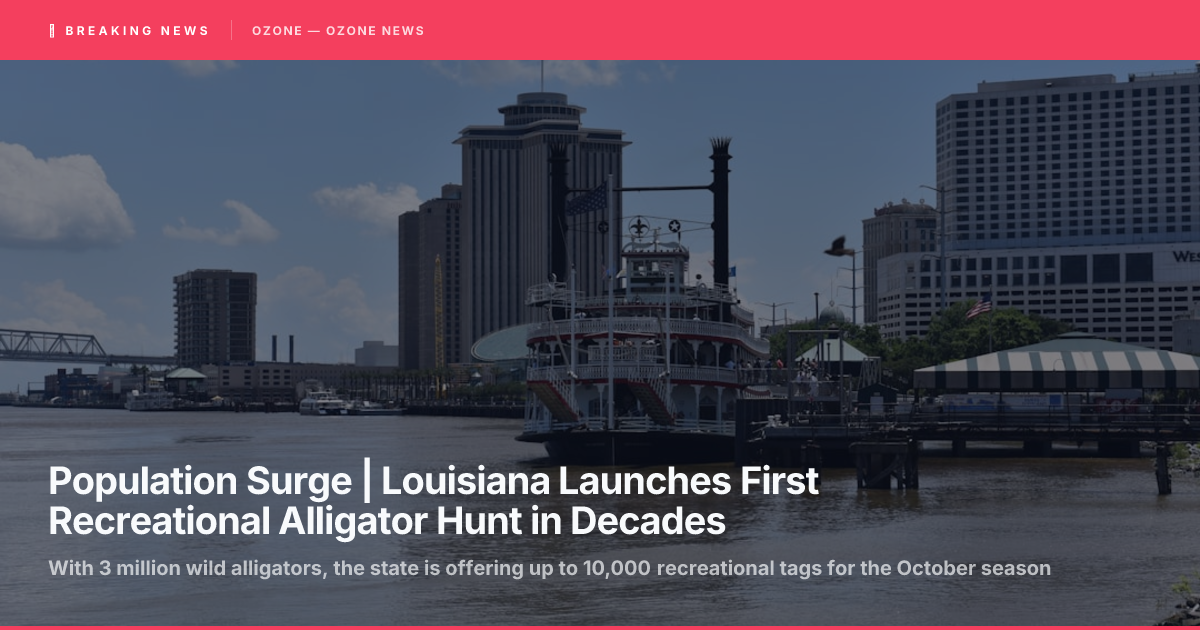
BATON ROUGE, La. — In one of the most remarkable conservation turnarounds in North American wildlife history, the American alligator (Alligator mississippiensis) has officially outgrown its traditional management framework in the bayous of the Deep South.
Following decades of strict federal protections and tightly regulated commercial harvesting, the Louisiana Department of Wildlife and Fisheries has announced a major policy expansion: the launch of a brand-new recreational alligator hunting lottery. Designed to help manage a wild population that state biologists now estimate at a staggering 3 million animals, the newly minted season will open on October 1, 2026, offering thousands of resident sports hunters the opportunity to legally harvest wild alligators for non-commercial use.
There are too many alligators, LDWF Secretary Tyler Bosworth stated during the official lottery rollout, pointing to rising human-wildlife encounters across coastal waterways, suburban canals, and public lakes. HoneyNewspaper's animals and wildlife beat has been tracking endangered species recovery stories where successful conservation creates new management challenges.
By the Numbers | Louisiana 2026 Alligator Management Grid
The new recreational framework operates alongside Louisiana's long-standing $250 million commercial hide and meat industry, introducing a separate, tag-bound lottery allocation for state residents. The estimated wild population stands at roughly 3 million alligators, making Louisiana the national leader in alligator numbers. The lottery permit cap is set at 5,000 selected applicants, limited to residents only. The maximum harvest volume is up to 10,000 alligators, with two tags per selected hunter. The season runs from October 1 through October 31, 2026, across 8 designated state harvest zones. Unlike commercial permits, the recreational tags are non-transferable no-sale tags, with meat retained for personal consumption.
The environment desk has reported on how the American alligator's recovery from the brink of extinction stands as one of the Endangered Species Act's most definitive success stories, with implications for how we manage recovered populations.
From Near-Extinction to Suburban Expansion
The necessity for an expanded hunt is rooted in an extraordinary biological recovery. By the early 1960s, unregulated market hunting and habitat destruction had pushed Louisiana's wild alligator numbers below 100,000, forcing state officials to completely ban alligator harvesting in 1962. Federal listing under the Endangered Species Act subsequently shielded the species, allowing numbers to steadily rebuild.
When controlled hunting resumed in 1972 under a commercial tag framework, LDWF successfully established a sustainable economic model driven by wild hide harvesting and commercial alligator farming. However, as the wild population crossed the 3 million mark, commercial quotas, which average roughly 24,000 wild harvests annually, proved insufficient to check population growth along urban-wildland interfaces. Increasing reports of large alligators invading residential neighborhoods, attacking pets, and congregating in public recreational waters prompted state lawmakers to authorize a dedicated recreational sports season. The LDWF official announcement outlines the full regulatory framework for the inaugural season.
Hook Lines and No-Sale Tags | How the October Hunt Works
To participate in the inaugural October season, applicants were required to submit entries through the state's online licensing portal prior to late August, paying a $50 non-refundable application fee per zone. Strict harvesting rules govern the recreational season. Hunters cannot open-fire on swimming alligators from boats. Instead, legal harvest requires setting baited wooden pegs or hooks suspended above the waterline attached to heavy line. Once the alligator ingests the bait and is secured, the hunter dispatches the animal at water level using a firearm.
Tags are strictly tied to specific harvest zones, requiring hunters to secure written landowner permission or utilize designated public waterbodies allocated by LDWF. Unlike commercial permits, recreational LA-N hide tags are explicitly tagged as non-sale. While hunters may keep the hide for personal tanning or taxidermy, neither the hide nor the meat can be sold into commercial supply chains. By giving local outdoor enthusiasts direct access to harvest up to two alligators per permit, state wildlife managers hope to reduce localized human-alligator conflict while maintaining Louisiana's reputation as a world leader in sustainable wildlife management. Follow ongoing coverage of wildlife management, conservation policy, and species recovery on our animals and wildlife beat.