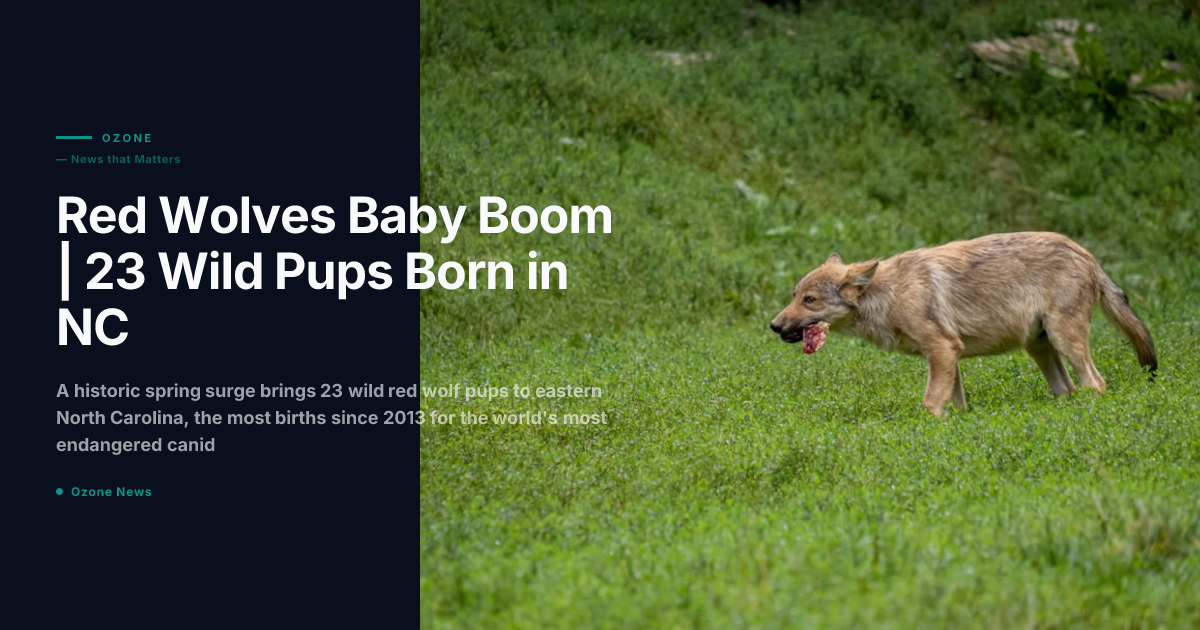
MANTEO, N.C. — For a species that has spent the last half-century balancing on the absolute edge of biological erasure, every successful denning season is a monument to survival. In the dense swamp forests, coastal marshes, and agricultural tracts of eastern North Carolina's Albemarle Peninsula, a dramatic spring surge has breathed new life into the world's most endangered wolf species.
According to the latest field audits released by the U.S. Fish and Wildlife Service's Red Wolf Recovery Program, a staggering 23 red wolf pups were born in the wild across four distinct litters this spring. The sudden wave of births marks the highest wild reproductive volume documented in North Carolina since 2013, briefly doubling the wild population of a native apex predator that had recently plummeted dangerously into the single digits.
"It's inspiring to see these underdogs making another incredible comeback," said Will Harlan, Southeast director for the Center for Biological Diversity, following the population tracking update. "These pups provide real hope for the future of red wolves." Our animals and wildlife desk has been tracking red wolf recovery data throughout the 2026 denning season.
The Denning Ledger | Eastern North Carolina Population Profile
The wild red wolf population operates within a tightly managed multi-county recovery zone centered around the Alligator River and Pocosin Lakes National Wildlife Refuges, buttressed by key private land management agreements. As of July 2026, the known and collared wild adult population stands at 22 individuals, with an estimated total wild adult base of 23 to 24 adults and subadults on the landscape.
The spring 2026 wild births produced 23 pups across four litters, of which 12 to 16 pups are actively being tracked and confirmed surviving their initial critical growth phase. An additional 295 wolves are maintained as captive insurance stock through the SAFE program, ensuring the species has a genetic safety net even as the wild population rebuilds.
The leading threat vector remains vehicle strikes along the Highway 64 transit corridor, which slices directly through the wolves' native hunting grounds and has claimed eight red wolves since 2020. The environment desk has documented how road mortality has become the single largest preventable cause of red wolf death in the recovery zone.
From Functional Extinction to the Private Land Moat
The historical trajectory of Canis rufus is a tumultuous case study in extreme conservation. Once roaming widely across the entire southeastern United States, intensive hunting and habitat loss forced the species to near-extinction by the 1970s. An initial, historic reintroduction effort by federal biologists in 1987 saw wild numbers peak at 130 wolves by 2011, before severe illegal gunshot mortalities and changing regulatory frameworks caused the population to collapse completely.
Between 2019 and 2021, a disastrous four-year stretch yielded zero wild births on the landscape, a trend that scientists warned was a rapid death knell for a species that typically averages a brief three to six years of life in the wild. The 2026 turnaround is attributed to the maturity of established breeding pairs and unique structural partnerships with regional citizens. Of the four documented litters, three were born to lifelong, monogamous pairs who successfully whelped the previous year.
Crucially, one massive litter of eight pups was born directly on private property through the Prey for the Pack initiative. The program financially incentivizes local landowners to welcome wolves onto their acreage, establishing a vital geographic buffer zone outside the restricted federal refuge boundaries. To expand long-term genetic health, field biologists also executed a critical cross-fostering maneuver, successfully slipping a captive-born pup from the Saint Louis Zoo into a wild litter on the Alligator River refuge.
This public-private partnership model is one of the most innovative aspects of the recovery program, and our community reporters have been documenting how local landowner participation has expanded the habitable range for the species beyond what federal land alone could support.
Engineering a Safe Future | The $31 Million Highway Crossing
While a 50% pup mortality rate is standard for wild litters during their first few months of development, field teams using abdominal tracking transmitters confirm that between 12 and 16 of the spring pups have survived their initial critical growth phase. However, keeping these juvenile packs alive requires solving the leading cause of modern red wolf mortality: vehicle strikes.
Since 2020, eight red wolves have been killed by cars, with nearly all strikes occurring along Highway 64, a high-speed arterial roadway cutting directly through the center of the wolves' native hunting grounds. To mitigate this bottleneck, state and federal agencies have finalized contracts to break ground on a massive infrastructure project backed by a $31 million federal grant. Complemented by nearly $2 million in independent funding raised by the Center for Biological Diversity, the state will construct specialized wildlife crossings beneath Highway 64.
The underpasses are explicitly engineered to safely guide wolves, black bears, and local wildlife beneath traffic lanes, ensuring that this historic spring baby boom is not cut short by a highway bumper. The project represents one of the largest single infrastructure investments in red wolf recovery since the original reintroduction program began in 1987.
Follow ongoing coverage of red wolf recovery, wildlife crossings, and endangered species policy on our animals and wildlife beat and our ethics and accountability desk.