Collagen is the structural backbone of youthfulness. Accounting for nearly 80% of your skin's dry weight, this structural protein resides in the dermis, the thick inner layer of skin, where it forms a dense, mesh-like network alongside elastin and hyaluronic acid.
While collagen loss is an inevitable part of the aging process, understanding how it breaks down and how to stimulate its continuous production through nutrition, topicals, and advanced signalers like GHK-Cu provides an actionable blueprint for maintaining firm, resilient skin month after month. HoneyNewspaper's public health desk has been tracking the science of skin aging and the evidence behind popular anti-aging interventions.
The Science of Collagen Breakdown
Starting in your mid-20s, your body's natural production of Type I and Type III collagen slows down by approximately 1% per year. By the time you reach your 40s, collagen degradation outpaces new synthesis. Two primary forces drive this degradation. Intrinsic aging causes dermal fibroblasts, the biological factories that manufacture collagen, to naturally become dormant over time due to cellular senescence. Extrinsic aging, primarily photoaging from UV exposure and oxidative stress, activates enzymes called Matrix Metalloproteinases (MMPs). These act like molecular scissors, cutting robust collagen bundles into weak, fragmented pieces.
The science desk has covered how the molecular mechanisms of aging are increasingly well understood, opening the door for targeted interventions that address the root causes of tissue degradation rather than just masking the symptoms.
A Monthly Strategy for Collagen Stimulation
Because the skin operates on a roughly 28-to-40-day turnover cycle, structuring your collagen-boosting regimen into targeted monthly modalities ensures continuous stimulation across every layer of the dermis.
Nutritional Building Blocks: Taking hydrolyzed collagen peptides, typically 5 to 10 grams daily, supplies your body with specialized amino acids, specifically glycine, proline, and hydroxyproline. When ingested, these di- and tri-peptides are absorbed through the gut lining and travel to the dermis, serving as both raw material and a subtle signal to trick fibroblasts into thinking collagen breakdown has occurred, prompting them to synthesize fresh fibers.
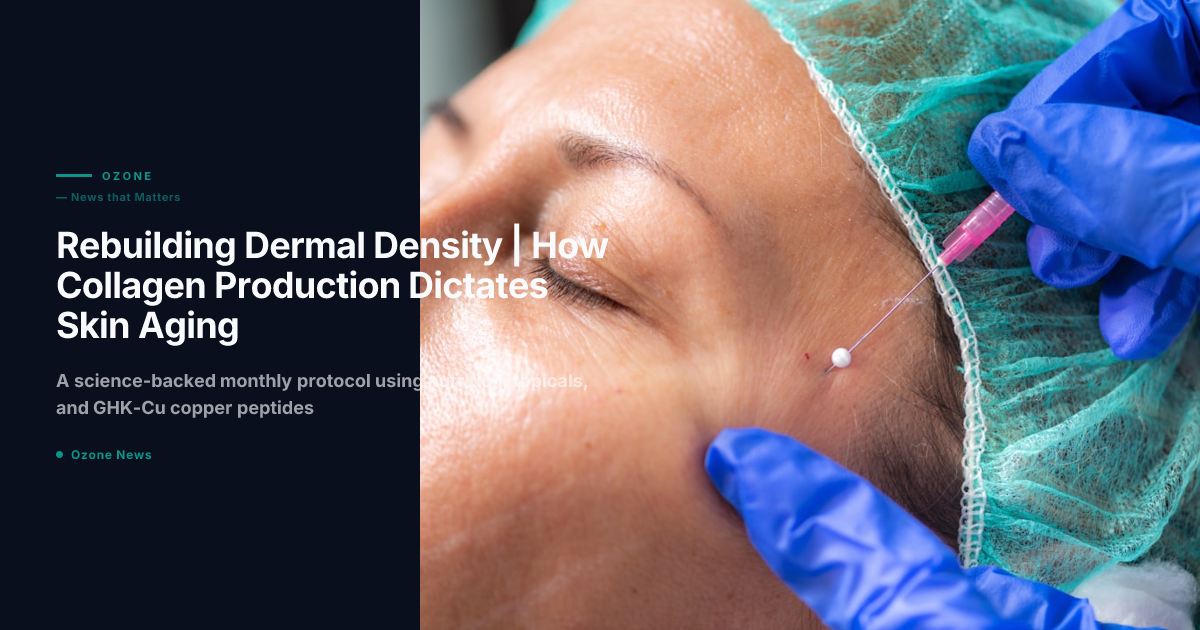
Topical and Mechanical Stimulation: Beyond nutrition, physical and topical interventions prompt skin cells to rebuild their matrix. Vitamin C (L-Ascorbic Acid) is an essential cofactor for the enzymes prolyl hydroxylase and lysyl hydroxylase, which stabilize the triple-helix structure of new collagen molecules. Retinoids, or Vitamin A derivatives, accelerate cell turnover and directly inhibit the MMP enzymes that break down intact collagen. Microneedling, performed on a monthly cycle, creates controlled micro-channels in the skin that trigger a natural wound-healing cascade, releasing growth factors that spark a surge of collagen synthesis over a 30-day recovery cycle.
The public health desk has examined how the combination of nutritional and topical interventions produces significantly better outcomes than either approach alone, a finding supported by the dermatological literature.
The Signal Layer | Where GHK-Cu Comes In
While oral peptides provide the raw bricks and topicals encourage surface renewal, your cells still require a chemical signal telling them how to organize those materials into dense dermal tissue. This is where GHK-Cu (Copper Peptide) serves as a powerful secondary catalyst.
GHK-Cu resets gene expression to a more youthful profile, signaling dormant fibroblasts to actively convert amino acids into structured Type I collagen. Unlike harsh acids, GHK-Cu balances collagen creation with controlled breakdown, clearing away damaged, misfolded collagen fibers while building healthy new ones. Pairing GHK-Cu topicals or serums alongside your daily collagen supplementation ensures your skin has both the raw building blocks and the cellular instructions to rebuild its framework.
According to research published in the International Journal of Molecular Sciences, GHK-Cu's regenerative and protective actions are mediated through its ability to modulate gene expression across multiple pathways simultaneously, making it one of the most comprehensively studied peptide signalers in dermatology.
Monthly Collagen-Optimization Protocol
The evidence supports a layered approach. Oral collagen peptides taken daily supply systemic amino acid availability, providing glycine and proline substrate for tissue repair. Topical Vitamin C combined with retinoids provides local enzymatic stabilization and turnover, preventing MMP collagen breakdown and boosting production. GHK-Cu copper peptides applied topically direct genetic signaling and tissue remodeling, telling fibroblasts to rebuild organized dermal density. Monthly microneedling sessions trigger the wound-healing cascade that drives deep structural collagen synthesis.
By combining all four modalities into a structured monthly cycle, you address collagen production from every angle: raw materials, enzymatic support, genetic signaling, and mechanical stimulation. Follow ongoing coverage of skin health, dermatological science, and anti-aging research on our public health desk.